Tesla’s Cybercab event sent search traffic into a frenzy — “cybercab,” “tesla cybercab event,” and “tsla stock” all spiked into Google’s top trending terms within hours of the stage going dark. Retail investors flooded brokerage apps trying to decide whether the robotaxi reveal was a buy signal, a sell signal, or a “wait and see.”
Here is what actually happened at the event, what it means for Tesla’s business, and — more importantly — the framework you should use before letting a keynote move your money.
What the Cybercab Event Actually Showed
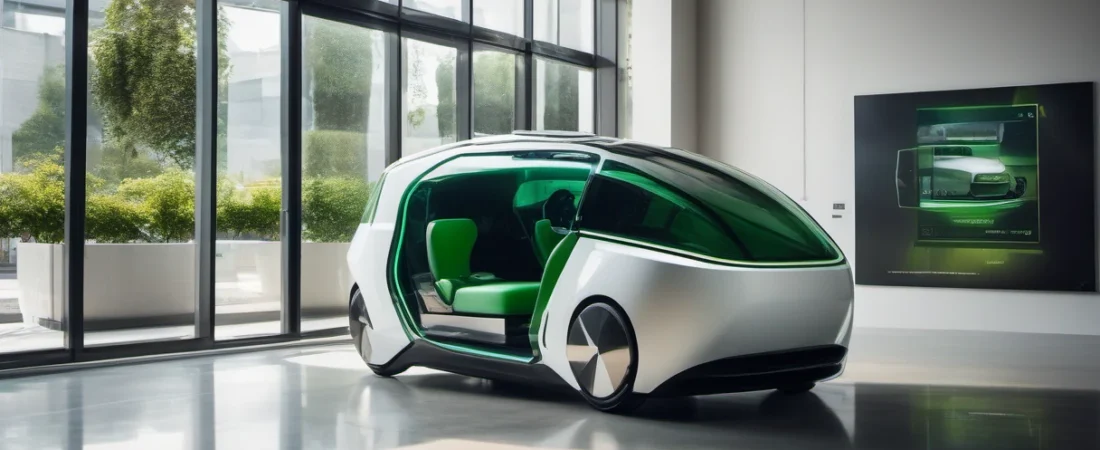
Elon Musk’s company unveiled the Cybercab: a two-seat, steering-wheel-free vehicle designed exclusively for autonomous ride-hailing, pitched at a target price under $30,000 and a promised cost of ownership measured in pennies per mile. The accompanying “Robovan” concept and claims of a future fleet economics pitch — Tesla taking a cut of every autonomous mile — reframed the company as a software-and-mobility business rather than a carmaker.
What the event did not include: firm regulatory approvals, a certified driverless safety driver, or a production timeline that has ever survived contact with Tesla’s own history of “next year” promises. That gap between vision and validation is exactly where stock prices get whipsawed.
Why TSLA Moves on Events, Not Earnings
Tesla trades more like a narrative stock than a traditional automaker. Its valuation embeds enormous expectations for autonomy, robotics, and energy — so a keynote can move the stock more than a quarterly delivery report. The SEC filings behind Tesla’s financials show automotive gross margins compressing while the market pays for a future robotaxi monopoly.
This creates a specific hazard for retail investors: buying after the hype peak. Search data does not lie — when “tsla stock” trends nationally, casual buyers are arriving at exactly the moment attention (and often price) is highest.
The Bull Case and the Bear Case
Bull: Tesla is the only company with the fleet data, custom AI silicon, and vertical manufacturing integration to solve robotaxis at scale. If Cybercab ships on even a delayed timeline with unsupervised autonomy, the profit pool dwarfs car sales. The NHTSA’s evolving AV framework could eventually bless Level 4 vehicles, unlocking the whole thesis.
Bear: Waymo already runs paid driverless fleets in multiple cities today. Regulatory approval for a wheel-less car is years away, the economics of a sub-$30K autonomous vehicle are unproven, and Tesla has a decade-long record of optimistic timelines. Valuation already assumes success — leaving little margin for delay.
Should You Buy TSLA After the Event? A Framework
Nobody can answer that for you, but this checklist turns a hype moment into a decision:
- Do you have a written investment plan? If a keynote can change your position, you did not have a plan — you had a mood. Our guide to how much to invest monthly helps you build the plan first.
- Can you hold through a 50% drawdown? Single-stock volatility is brutal. TSLA has dropped more than 50% four separate times since 2020.
- Is this speculation or investing? Allocate no more than 5-10% of a portfolio to any single narrative stock — a rule echoed by nearly every SEC investor-education resource on diversification.
- Are you buying the story or the business? Read the latest 10-K and shareholder letter. If you cannot summarize the revenue model in two sentences, the market can outsmart you.
- Would you still own it if the market closed for five years? The ultimate test of whether you are investing or trading.
A Bolder Way to Get Tech Exposure
If you believe in autonomous vehicles broadly — not Tesla specifically — a broad index fund or innovation ETF gives you Tesla, Alphabet’s Waymo, chipmakers, and the rest of the ecosystem without betting your retirement on one CEO’s timeline. For most beginners, that is the mathematically superior bet; our account-selection guide shows where to hold them tax-efficiently.
The Real Question: What Is Priced In?
Ask a different question than “is Tesla good?” and you get a more useful answer: “how much of the robotaxi future is already in the share price?” At valuation multiples that dwarf every legacy automaker, the market is paying for success, not just expecting it. That means the Cybercab thesis can be right and you can still lose money — if reality arrives slower or smaller than the price already assumes. Analysts at research shops like Northwestern’s Kellogg School have published long-running work on “expectations investing”: the returns you earn depend on the gap between what is priced in and what actually happens, not on whether the company is “good.” When a stock trends on search engines after a keynote, that gap usually narrows in the wrong direction for late buyers.
One more practical point: taxes. If you trade TSLA in and out on event hype inside a taxable brokerage account, short-term gains are taxed as ordinary income. Holding inside a Roth IRA — where a Roth vs Traditional decision should be made once, calmly — changes the math entirely. Event-driven trading quietly erodes returns through both spread and the tax man.
Frequently Asked Questions
Did TSLA stock go up after the Cybercab event?
The initial pop faded quickly in the days after the reveal — a classic pattern where anticipation is priced in before the event and sellers take profits after. Trending searches spiked even as momentum cooled.
When does Cybercab actually launch?
Tesla has stated a target of 2026 for limited production, contingent on regulatory approval for unsupervised autonomy. Treat all Tesla dates as estimates, not commitments.
Is buying the dip on hype stocks a good strategy?
Only if the dip reflects sentiment rather than fundamentals. Buying after a trending search spike is statistically the worst time for attention-driven stocks — you are the exit liquidity for earlier buyers.
What should beginners buy instead?
A diversified core — total-market index funds in a Roth IRA or high-yield account — before any single stock. See our Roth vs Traditional IRA comparison for the account side.
The Bottom Line
The Cybercab event was a genuinely ambitious vision — and a masterclass in why retail investors must separate spectacle from strategy. Tesla may well become the robotaxi winner. But “great company” and “great stock at this price on this day” are different questions, and trending searches are almost never a buy signal.
Decide your allocation rules on a calm day, in writing, before the next keynote hits your feed. Your future self will thank you.