
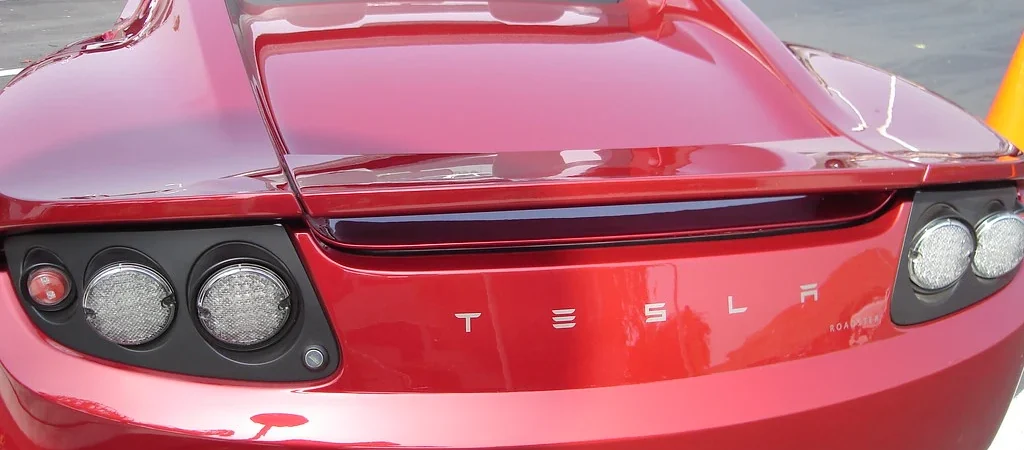
Tesla Roadster 2026 Price and $50,000 Deposit: The Honest Money Math Before You Reserve
The Tesla Roadster is finally close to production, and the headlines are dominated by one number: the $50,000 reservation deposit. But before you put that kind of money down on a $200,000 sports car, it’s worth running the honest money math — what the Roadster actually costs, what the deposit really ties up, and whether that cash could be working harder elsewhere. This is the investor’s-eye view of the 2026 Tesla Roadster you won’t get from a promo video.
What the 2026 Tesla Roadster actually costs
Let’s start with the sticker. According to Car and Driver and MotorTrend, the 2026 Roadster is expected to start around $200,000, with the limited Founders Series model going for about $250,000. It’s positioned as a halo sports car with sub-two-second 0–60 times and roughly 1,000 horsepower.
- Base Roadster — starting around $200,000.
- Founders Series — a limited edition in the $250,000 range.
- Production timing — Tesla has teased a debut around late 2026, though the company’s timeline history means the schedule is far from locked.
At $200,000+, this is not a purchase — it’s an allocation of significant capital that deserves the same scrutiny as any large investment.
The $50,000 deposit, explained
Reserving a Roadster isn’t a token gesture. Tesla’s own reservation process requires a substantial initial payment. According to Tesla’s Roadster reservation page, the reservation currently involves an initial $5,000 credit card payment plus a $45,000 wire transfer due within about 10 days — roughly $50,000 total. The deposit is fully refundable, which is the key upside.
- $5,000 via card — this opens the reservation.
- $45,000 via wire — due quickly, usually within ~10 days.
- Fully refundable — if you cancel, you get your money back, though the timeline for processing a refund isn’t instant.
The refundable nature is genuinely important: it means the $50,000 is at risk only in terms of opportunity cost — the growth you give up while it sits — not as a sunk loss.
The real cost: opportunity cost of $50,000 parked
Here’s where the investor math matters. Even though the deposit is refundable, that $50,000 is money you can’t use for years while you wait for a car. Let’s model the trade-off.
- Lost market growth — if that $50,000 were in a broad index fund historically averaging ~7–10% a year, it could grow meaningfully over the multi-year wait for Roadster delivery rather than sit idle.
- Guaranteed growth instead — parked in a high-yield savings account or short-term Treasuries earning ~4–5%, $50,000 earns about $2,000–$2,500 a year in interest you’d be giving up.
- Compounding matters — over a 5-year wait at 5% simple interest that’s ~$12,500 in lost interest; invested and compounding at a higher rate, the gap widens further.
- Liquidity — the deposit is refundable but the refund isn’t instant; if you might need that cash, it’s not fully liquid.
Put plainly: the deposit isn’t “lost,” but it’s parked, and parked money has a real annual cost.
Financing a $200,000 car rarely makes sense
For most households, financing a $200,000+ supercar produces a crushing monthly payment and interest load. Here’s why the math usually fails outside of high-net-worth situations:
- Huge payments — even a well-structured loan on $150,000 of the price at current rates could push monthly payments into the thousands and total interest into five figures over the term.
- Depreciation — high-end sports cars can depreciate sharply; financing a depreciating asset magnifies the loss because you owe more than it’s worth early on.
- Alternative use of capital — the same $50,000+ down payment and monthly cash flow could otherwise be compounding toward retirement, a mortgage, or an income-producing investment.
- Few qualify — lenders underwriter tight debt-to-income ratios, so most people simply won’t qualify at this price point without stretching.
The financially sound path for almost everyone is: if you can’t buy the car in cash while also staying on track with your other goals, it’s not the right purchase — regardless of how fast it is.
If you’ve decided it’s worth it, do it smart
If you truly have the means and the deposit is a rounding error in your portfolio, here’s how to handle it prudently:
- Confirm the refund terms in writing — verify with Tesla what triggers a refund and how quickly it’s processed.
- Use a card with a sign-up bonus for the $5,000 — if you have high credit, a card offering a large welcome bonus can turn part of the reservation into points.
- Keep the rest earning — don’t pre-fund more than the required deposit; keep the eventual balance invested or in high-yield savings until delivery is assured.
- Treat it as a splurge, not an investment — a car is an expense; never justify a $200,000 purchase with “it’ll hold value” when safer assets exist.
- Cap your exposure — the refundable $50,000 is the most you should tie up; never stretch into an unaffordable loan to look the part.
Done this way, the reservation is a reversible bet on a fun car rather than a financial mistake.
Frequently asked questions
How much is the 2026 Tesla Roadster?
The base Roadster is expected to start around $200,000, with the limited Founders Series model around $250,000, according to major auto publications.
Is the $50,000 Roadster deposit refundable?
Yes. Tesla’s Roadster reservation deposit is fully refundable, and it typically involves an initial $5,000 card payment plus a $45,000 wire transfer due within about 10 days.
Should I finance a $200,000 Tesla Roadster?
For most people, no. The payments and interest on a supercar are often outsized relative to typical budgets, and financing a fast-depreciating asset rarely beats using that cash flow elsewhere.
What’s the real cost of the deposit?
The deposit isn’t lost since it’s refundable, but there’s an opportunity cost: the cash earns little while parked, whereas the same $50,000 could earn thousands in interest or investment growth during the wait.
The bottom line
The 2026 Tesla Roadster is a stunning piece of engineering, but at $200,000–$250,000 with a $50,000 deposit, it demands investor-grade thinking, not just car-guy enthusiasm. The deposit is refundable — a genuine plus — but the real price is the opportunity cost of parking $50,000 while you wait, plus the car payment burden if you finance the rest. Only buy one if you can pay for it in cash without derailing retirement, emergency savings or other goals; otherwise, let that money compound in the market or a high-yield account instead. The Roadster will be fast either way, but your financial future should know the difference between a splurge you can afford and one you can’t.
Read More Articles
Photo via Openverse (Flickr, CC BY 2.0)